Showing posts with label temples. Show all posts

Monday, January 14, 2013

Why Makar Sankranti is given special importance?


Why Makar Sankranti is given 

special importance?

From all the transit’s, Makar Sankranti is treated as special and is given unique importance. There are several factors that contribute toward it. On Makar Sankranti, sun becomes Uttarayana (northward apparent migration of sun), it indicates that from now onward auspicious time commences. If we calculate astronomically, Makar Sankranti takes place 21 days after the winter solstice (December 20–23), approximately. The day indicates the northward journey of sun. From winter solstice, the days start becoming longer. Winter solstice begins on 21st December or on 22nd and on this day sun enters the zodiac sign Capricorn. Uttarayana falls on December 21 and earlier this was the actual date of Makar Sankranti. But, our Earth has a tilt of 23.45 degrees and sliding of equinoxes, which causes the occurrence of Ayanamsa. 
Makar Sankranti is a special festival as it marks the commencement of auspicious time of the year. Make the best out of this day. Happy Makar Sankranti 2013

Wednesday, April 7, 2010

Nizam,BRITISH,story of Circar Districts

Hostilities recommenced in India between the French and the English in AD.1758 on the outbreak of Seven Years War in Europe in A.D.1756. As a result, the French lost their power in India and consequently it also lost influence at Hyderabad. In A.D.1762 Nizam Ali Khan dislodged Salabat Jung and proclaimed himself as Nizam.

Hyderabad came into focus again when Nizam Ali Khan (Nizam II) in A.D.1763 shifted the capital of the Deccan from Aurangabad to Hyderabad. Such a move helped rapid economic growth and expansion of the city, resulting in its importance and prosperity.

Between A.D.1766 and A.D.1800, Nizam's sovereignty had declined considerably and the British gained their authority over the Nizams by compelling the latter to sign six treaties.
In A.D.1766, the Nizam signed a treaty with the British, whereby in return for the Northern Circars, the British agreed to furnish Nizam Ali Khan with a subsidiary force as and when required and to pay Rs.9 lakhs per annum when the assistance of the troops was not required in lieu of Northern Circars to be ceded to them. In A.D.1768 he signed another treaty conferring the Northern Circars to the British and the payment by the British was reduced to Rs.7 lakhs. According to another treaty, he surrendered the Guntur circar in A.D.1788. In A.D.1779, the Nizam conspired with Hyder Ali of Mysore and the Peshwa of the Marathas to drive away the English. When they learnt about his designs, the English marched against the Nizam who had to sue for peace agreeing to the presence of an English Resident along with army, artillery and cavalry at Hyderabad

Wednesday, March 31, 2010

Centre's decision to form Telangana

Deccan Chronicle
The largest selling English daily in Bangalore and Hyderabad
Your Ad Here
Friday, December 11, 2009
Decision on Telangana driven by Rahul's plan to split UP

Several Congress leaders feel that the Centre's decision to form Telangana is part of a longterm strategy chalked out by the AICC general secretary, Mr Rahul Gandhi, who wants to gain hold over Uttar Pradesh by dividing it into Bundelkhand and Purvanchal.

The Centre's decision on Telangana would bring life to agitations in the two regions of UP and would aid Mr Gandhi's political strategies.

Tuesday, March 30, 2010

SARKAR SEEMA under Presidency RULE


The Madras presidency was administered by a governor and a council, consisting of two members of the civil service, which number may be increased to four. There was also a board of revenue of three members. For legislative purposes the council of the governor was augmented by additional members, numbering 45 in all, of whom not more than 17 may be nominated officials, while 19 were elected by various representative constituencies. Members of the legislative council enjoyed the right of interpolation, of proposing resolutions on matters of public interest, and of discussing the annual financial statement.

In 1911 the province was divided into 24 districts: Ganjam, Vizagapatam (Visakhapatnam), Godavari, Krishna, Kurnool, Nellore, Cuddapah, Anantapur, Bellary, North Arcot, South Arcot, Chingleput, Madras, Salem, South Canara, Malabar, Coimbatore, Tiruchirappalli, Tanjore, Madurai, Tirunelveli, The Nilgiris, and Guntur. Each district was under the charge of a collector, with sub-collectors and assistants. The districts were not grouped into divisions or commissionerships, as in other provinces

Monday, March 29, 2010

TCMG goes to New delhi on Telangana

Telangana tale is full of
continuous oppression,
imperialism,
colonization,
expansionism,
linguistic abuse
and
human rights violations
.

At present, TELANGANA is in UNPRECEDENTED MASS UPHEAVAL.

The word TELANGANA is thousands of years old. It means the land where Telugu is
spoken. The land has civilization of thousands of years.

Monday, March 8, 2010

ART OF SATAVAHANAS


The Sātavāhana kings are also remarkable for their contributions to Buddhist art and architecture. They built great stupas in the Krishna River Valley, including the stupa at Amaravati in Andhra Pradesh. The stupas were decorated in marble slabs and sculpted with scenes from the life of the Buddha, portrayed in a characteristic slim and elegant style. The Satavahana empire colonized southeast Asia and spread Indian culture to those parts. Mahayana Buddhism, which may have originated in Andhra (northwestern India being the alternative candidate), was carried to many parts of Asia by the rich maritime culture of the Satavahanas. The Amaravati style of sculpture spread to Southeast Asia at this time.

The Satavahanas contributed greatly to the embellishment of the Buddhist stupa of Sanchi. The gateways and the balustrade were built after 70 BCE, and appear to have been commissioned by them. An inscription records the gift of one of the top architraves of the Southern Gateway by the artisans of the Satavahana king Satakarni:

Gift of Ananda, the son of Vasithi, the foreman of the artisans of rajan Siri Satakarni

Throughout, the Buddhist art of the Satavahanas remained aniconic, denying any human representation of the Buddha, even in highly descriptive scenes. This remained true until the end of the Satavahana rule, in the 2nd century CE.

MY RESEARCH PAPER DEDICATED TELANGANA PEOPLE

Cant we accept the theory of puranas of 29 kings ,which was

Corraberated by all puranas not one in same pattern except minor

Differences, now and then we get coins of some new rulers .

There are instances that only numismatic evidence which give

us proofssome unknown dynasties and kings so refute in this

point with some scholars.

Being numismatist I have seen lot of instances like this ,last

Decade,We have not seen many chera coins now we have

seeing many new varietiesOf chera coins.Hope some day

we will get a big hoard of coins of rulers with unknown

kings of satavanahas in tune with Puranas?

The Puranas like Matsya, Vayu, Vishnu, Bhagvata and Brahmanda

provide important, if confusing, data for the reconstruction of the

Satavahana history. Literary works like Brihatkatha of Gunadya,

Gathasaptasati of Hala, or Lilavati yield useful information on the

period. Foreign literary sources like the ‘Indica’ of Megastanese,

Pliny’s ‘Natural History’,

The study of the Satavahana coins, particularly the Jogalthambi

hoard of Nahapana’s coins, most of them restruck by Gautamiputra

Satakarni, can help the historian of the period. The Satavahana

inscriptions, all of them inscribed on stone, provide valuable data

for the reconstruction of their history

LIST OF KINGS IN SCHOLAR VIEW

oots of satavanhana ???

In the first edition of this work, R. G. Bhandarkar had advanced the

view that the rise of the Satavahana power should be placed during

the second quarter of the first century B. C.1 This view

has been subsequently accepted by D. R. Bhandarkar2, H. C. Roy

Chaudhuri 3 and D. C. Sircar.

The arguments in favour of this view are not without weight. The most

cogent evidence insupport of this theory is the unanimous statement of

the Puranas that Simuka, the first Andhra (i.e.Satavahana king),

will rise to power after overthrowing the last Kanva ruler Susarman and

destroying what remained of the Shunga power5. It is generally assumed

that the Shungas ruledfrom c. 187 to 75 B. C. and the Kanvas from c.

75 to 30 B. C. It is therefore maintained by thisschool that the rise of

Simuka, the founder of the Satavahana dynasty, should be placed in the third

quarter of the first century B.C.

This would lead to the conclusion that the dynasty ruled for about two

and a half centuriesonly; we can now well understand why one Puranic

tradition asserts in round number that the rule ofthe Satavahanas lasted

for three centuries only.

Normally speaking about 17 or 18 kings only can flourish during this period,

and we ca nnow well understand why one Puranic tradition enumerates

18 Andhra kings only.

If we assume that the Satavahana dynasty consisted of about

thirty kings who ruled for about 450 years, we have to assume a

big gap of about 150 years between the earlier and later Satavahana

kings, known to us from inscriptions3and coins. This gap disappears

almost altogether I fwe place the rise of Simuka in c. 30 B.C.

R. P. has drawn attention to the palaeographical difficulties in

accepting the theory that Satakarni, the 3rd Satavahana

My view is that when Puranas shed light ,when there is no other

evidence present ,

KINGS LIST OF SATAVAHANA

Gautamiputra (Sri Yagna) Sātakarni (also known as Shalivahan) (r. 78-106 CE)

Defeated.According to the Western Satrap ruler Nahapana, restoring the prestige

of his dynasty by reconquering a large part of the former dominions of the

Sātavāhanas.

He was an ardent supporter of Hinduism.According to the Nasik inscription made by

his mother Gautami Balasri, he is the one…who crushed down the pride and conceit

of the Kshatriyas (the native Indian princes, the Rajputs of Rajputana, Gujarat and

Central India); who destroyed the Shakas (Western Kshatrapas), Yavanas

(Indo-Greeks) and Pahlavas (Indo-Parthians),… who rooted the Khakharata

family (The Kshaharata family of Nahapana); who restored the glory of the

Satavahana

Chronology and geography are rightly stated to be the two eyes of history;

neither of themhowever enables us to get a clear glimpse of the Satavahana

history. There are wide differencesamong scholars both about the time when

the Satavahanas rose to power, as also about theiroriginal home. One school

holds that the Satavahanas established their power in the last quarter of

the 3rd century B.C.; the other opines that they began to rule in the second

quarter of the firstcentury B. C. One school holds that their home was

somewhere in Andhra country or Telangana ;the other holds that it lay

somewhere in Maharashtra, either in Western India or near Pratisthana

,their traditional capital. It will be convenient to settle these controversial

points before we proceed togive an account of the history of the dynasty.

SATAVAHANA FOUGHT ANGAINST FOREIGN INVADERS

In Asoka edicts mentioned in semi-indipendent state.

The LAW of PIETY in the edict of XIII as preached by kings emissaries’ was

arranged by an unique way of classification principle.

First are recorded the names of kings and peoples whose independence is of

no question, secondly are mentioned ‘the kings dominion’ and lastly come a

number of peoples, divided like the independentInto northern and southern

group,who may be supposed,from the considerations also,to have

independent, semi-indipendent ones, in this group are the Andhra classified so

andhras people ar ealways own their independence but have cordial relations

with north Indian rulers.

The conquest of Kalinga took place in the 9th year of the kings

reign that was 261BC

The Jaugada and Dhauli edicts comment on the duties of officials of the border

tribes which were

written on 14th year 256BC show the policy of conciliation from Asoka side .

Before the foundation of the Satavahana empire, the Deccan was covered with a

Large number of petty kingdoms, which were often at war with one another. The

Satavahanas for the first time wielded the Deccan into a powerful State and gave

a cohesion and integrity to its history. The Deccan prospered immensely

under their strong rule. At a time when northern India was suffering from a series

of invasions by foreign powers like the Bactrians, the Sakas, the Parthians end the

Kusanas, the Deccan was enjoying relative peace. Among the foreigners, the

Sakas eventually succeeded in establishing a base at Ujjayini, from which

they proceeded to attack the Deccan. For a time the Satavahanas had to

give way and portions of Konkan and Northern Maharashtra were lost to them.

But very soon the Satavahanas drove out the foreigners from the Deccan and

restored freedom to the conquered provinces. The role of the Satavahanas in this

connection is comparable to that of the Vijayanagar empire in later times.

SATAVAHANA COINS

Satavahana rulers were subdued during the period of Asoka but were independent

rulers from 8 th c BC,as given the privilege to be of vishvamitra lineage, In puranas

they were referred as satavahanas,satakarni,and Andhras, they have 30 forts ,

1000 elephants,100,000 infantry,2000cavalry.

The Deccan region was covered by large number of small tribal

kings which were often in war among themselves.

The Satavahana were the strongest among them after naga kings,

In this way the kingdom of satavahana came into existence in telanagana

region defeating the mahatalavaras.We get numismatic evidence to prove

this point enclosing the photo of rare Mahatalavarasa coin from my coin

collection along With some satavahana coins too from various coin collectors

collection which were worth noting in explaining the expertise used in minting

and various designs from various regional mints of one king and

Of other satavahana rulers Explained,

MAHATALAVARASA TELUGU WORDS OF PRE STAVAHANA KINGS

The history of Satavahana dynasty start from Karimanagar,Adilabad region.

Before them the MahatalavarasRuled this region, we come across coins of

Mahatalavara and other pre –Satavahana rulers, But lack of

Script on coins make us puzzled about their history. But their

style of design on coins gives us their Independent style of coin minting than

north India, gives us clue about their existence before satavahana

dynasty. Recent discovery of fort at near water falls in Ichoda mandal

gives us proof about that.The cobbled

pathwayfortifications show us the importance of this fort ,at we may

assume it was the capital of satavahana dynasty The pottery with

several circles gives us it is of new type as similar seals are excavated in Egypt

also, which show us the satavahana maritime trade. Early period of satavahana

trade flourished with Egypt

sumeria,hittitites,which made south India the hub of trade,we exported spices

and got in exchange gold. Diamond mines were famous in whole world,

Queens were given important place in satavahana dynasty

Queen Naganika,wife of satakarni was perhaps the first queen found on

incriptions.,Even Nanaghat,Nasik incriptions give details of satavahana

rulers.Satavahana kings were first to issue the silver coins with portrait of king face.

They equally gave donations to Buddhist,Jain,Brahmains.

Conducted Ashwamedha yagnamto show their strength. They ruled whole of

telangana,Andhra,Karnataka,konkan,maharshatra,vidraba,gone

upto Gujarat,Vidisha in north and still further. South Indian history was

given little importance sofar, specially satavahana period for lack of

encouragement and was neglected. We were first to trade with outside world,

build ocean going ships and mint it on coins.

HISTORY OF SATAVAHANA FEMALE ATTENDEANTS


atavahana rulers were quoted in old works like the Aitareya Brahmana,the Epics ,

the Paraná’s, the early Buddhist and Jain works.Gunadhya’s Brhatkatha,

Hala’s Gathasaptasati and Vatsyayana’sKamasutras reflected the

social and cultural life of the Satavahana period.

The Kathasaritsagara mentions the story of a king named Dipakarni

who saw a boy riding a Sata or lion, adopted him and named him

Satavahana

‘Satavahana’ and ‘Satakarni’ are the two standard names by which the

rulers of that dynasty are referred to in their inscriptions and coins.

Various explanations have been given for these names: Satkarni means

” the son of a horse”, and explained in terms of the Aswamedha tradition.

Barnett explained Satkarni as meaning the son of Sata. Sometime it is taken

to mean as one who has a hundred ships, or one whose vehicle is drawn by

hundred bulls or the one with his ears bored. The Kathasaritsagara mentions

the story of a king named Dipakarni who saw a boy riding a Sata or lion,

adopted him and named him Satavahana or the one who had a lion for his vehicle.

It is also suggested that Satavahana is only a variant of ‘Saptavahana’,

meaning the sun, and that they were so called because they were the worshippers

of the sun. these theories, however, have been discarded by Dr. M. Rama Rao,

who has argued that the dynasty has been named after the founder of the dynasty,

who ruled before Simukha.

Przyluski thinks that Sata and vahana, the constituents of Satavahana, are both

Mundawords; the former is the Sanskrtisation of the Munda word sadam meaning

a horse and the latter ofhapan meaning a son. Satavahanas were “sons of horse”

as they believed themselves to be born of the chief queen with the sacrificial horse

in the Asvamedha sacrifice So many kings in the Puranic dynasties as well as in

historic ruling families werecelebrated performers of the Asvamedha sacrifice

Even Megashtanes,Pliny ,Ptolemy,wrote refers about

satavahana army ,forts,maritimeTrade,viharas,even Fahein of 5th c AD ,wrote

about the donations to famous viharas by satavahana queens

Friday, February 26, 2010

GENTLEMEN AGREMENT FATE IN 2010

State Reorganisation Commission (SRC,1955) headed by Justice Fazal Ali has recommended that Telangana area shall continue as a separate state.

In 1956, Under “Gentlemen’s Agreement” Andhra leaders have given certain assurances to the Telangana leaders. On the basis of them united Andhra Pradesh was formed in 1956.
Safeguards given under Gentlemen’s Agreement in 1956

Status of those safeguards today i.e., in 2010:

1.It was reduced to 4 years in 1975.
Even that 4 years safeguard also grossly violated.
2.Not followed. Violated in many ways. Freezone concept initiated.
eg, not even 10% of jobs in Secretariat are from Telanagana people.
3.Regional Council itself was abolished. Lakhs of acres of fertile land under canals in Telangana region gone into the hands of the Andhrites. Minor irrigation in Telangana neglected.
4.Regional Council was abolished.
5.Those balance funds were transferred in large scale for the development of Andhra region.

6.In 1956 itself, the promise was broken. The first C.M. was from Andhra but Dy.C.M. post was not given to Telanganite.
Out of 54 years only 6 years C.M. post was held by Telanganites.
7.Not followed.

FORMATION OF TELANGANA

Telangana is a region of Andhra Pradesh state in India. The name means "land of Telugu people". It is comprised of the Telugu speaking parts of the erstwhile princely state of Hyderabad. The region lies on the Deccan plateau to the west of the Eastern Ghats range, and includes the northwestern interior districts of Warangal, Adilabad, Khammam, Mahabubnagar, Nalgonda, Rangareddy, Karimnagar, Nizamabad, Medak, and the state capital, Hyderabad. The Krishna and Godavari rivers flow through the region from west to east.

On December 9, 2009, the Government of India announced that the process for the formation of Telangana state will be initiated upon introduction and passage of a separation statement by the state assembly of AP. However, on December 23, 2009, the Government of India announced that the issue of a new state will be addressed only after a consensus is reached, thus effectively putting the formation of the new state in abeyance.

PEOM on telangana

gaddocce kODipilla... khiyyam khiyyam!! || gaddocce ||
neellettukellE... seemadonganu sUDu
boggettu kellE... AndrONNi sUDu
gaddocce kODipilla... khiyyam khiyyam!! || gaddocce ||

pulocce mEka... pAripO pAripO!! || pulocce ||
samaikyatanTu... sUsko samptaDu
abhivRddi anTu... unnadi UDustaDu
pulocce mEka... pAripO pAripO!! || pulocce ||

pillocce eluka... dAkko dAkko!!
jeevOlanTu... jAbulu dobbutaDu
vyApAramanTu... bhUmulu guncutaDu
pillocce eluka... dAkko dAkko!! || pillocce ||

gaddocce kODipilla... khiyyam khiyyam!! || gaddocce ||
]
- surya candrika

Thursday, February 25, 2010

TELANGANA FRIENDS SPREAD ABOUT UR BLOG


T

NAGARJUNASAGAR DAM PLANNED FROM1903


NAGARJUNASAGAR DAM PLANNED FROM1903

The proposal to construct a dam to use the excess waters of the Krishna river was put forward by the British rulers in 1903.Siddeswaram and Pulichintala were identified as the suitable locations for the reservoirs
The dam water was released by the then Prime Minister’s daughter, Indira Gandhi in 1967. The construction of the dam submerged an ancient Buddhist settlement, Nagarjunakonda, which was the capital of the Ikshvaku dynasty in the 1st and 2nd centuries, the successors of the
Satavahanas in the Eastern Deccan. Excavations here had yielded 30 Buddhist monasteries, as well as art works and inscriptions of great historical importance. In advance of the reservoir’s flooding, monuments were dug up and relocated. Some were moved to Nagarjuna’s Hill, now an island in the middle of the reservoir. Others were moved to the mainland Nagarjuna Sagar Dam is the world’s largest masonry dam built across Krishna River in
Nagarjuna Sagar,Nalgonda District of Andhra Pradesh, India. It is downstream to the Nagarjuna sagar reservoir with a capacity up to 11,472 million cubic metres which is the world’s largest man-made lake with a concrete wall of 6 ft. thickness. The dam is 490 ft. tall and 16 Km long with 26 gates which are 42 ft. wide and 45 ft. tall.It is one of the earliest irrigation and hydro-electric projects in India. The dam provides irrigation water to the Nalgonda District, Prakasam District, Khammam District, and Guntur district.

TILTED DAM,SWALLOWED NIZAM TIGER RESORT

TILTED DAM,SWALLOWED NIZAM TIGER RESORT

An engineering marvel with three galleries embedded at different elevations, Nagarjunasagar withstands the pressure of the water it contains, by its sheer weight. Even after 50 years of existence, its performance is astounding. All its safety parameters like uplift pressure, stress, deflection and tilt are found to be within the safe limits by the 206 gadgets that work round the clock.

The dam cheats the naked eye by tilting forward by a fraction of an inch during heavy floods but swings back to normal position. During the recent floods, the spillway discharged an enormous quantity of seven lakh cusecs, still four lakh cusecs short of its designed capacity.

It were the Nizams who originally proposed the dam at the present site, then tiger-infested forests, naming it as “Nandikonda” project after two villages Nandi and Konda which were to be submerged in the reservoir later. When the new state of A.P. took over the project, it was re-christened after Acharya Nagarjuna, Buddhist sage who lived in the Nandikonda valley centuries ago running a university on a riverbank, now called Anupu.

TELANGANA WATER SATELLITE MAP


TELANGANA WATER SOURCES,telangana satellite map,

The project benefited farmers in the districts of Guntur, Prakasam, Krishna, Nalgonda and khammam. The right canal (a.k.a Jawahar canal) is 203 km long and irrigates 1.113 million acres (4,500 km²) of land. The left canal (a.k.a Lalbahadur Shastri canal) is 295 km long and irrigates 0.32 million acres (800 km²) of land in nalgonda and khammam districts of telangana region. The project transformed the economy of above districts. 52 villages were submersed in water and 24000 people were affected. The relocation of the people was completed by 2007.

The hydroelectric plant has a power generation capacity of 815.6 MW with 8 units (1×110 MW+7×100.8 MW). First unit was commissioned on 7 March 1978 and 8th unit on 24 December 1985. The right canal plant has a power generation capacity of 90 MW with 3 units of 30 MW each. The left canal plant has a power generation capacity of 60 MW with 2 units of 30 MW each.

The dam is constructed in Nalgonda district. The dam also provides driking water to the Nalgonda town.

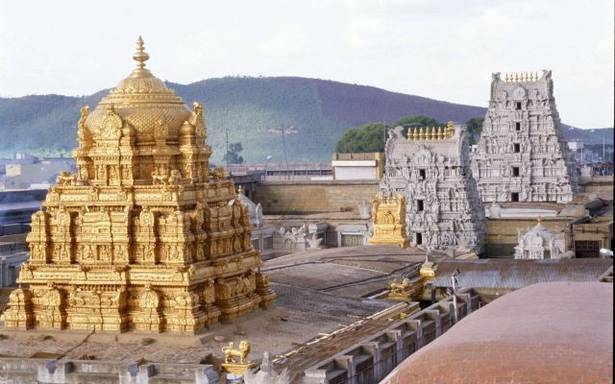
Tirupathy and Srirangam Gopuram Gold Layer by Shivappa Nayaka

 Tirupathy and Srirangam Gopuram Gold Layer by Shivappa Nayaka ÜsÁT|ŸÜ`lsÁ+>·+ýË“ $eÖq >Ã|ŸÚs\Å£” ‹+>±sÁT |ŸPÔá |ŸPsTT+ºq ¥e|ŸÎ H...