Following the ‘Non-Mulki’ agitation, the Government of Hyderabad notified Mulki Rules on
November 1, 1949. These rules provided safeguards to the people of erstwhile Hyderabad
State in government jobs. In terms of the provisions of these rules, no person was to be
appointed to any superior or inferior service if he was not a mulki and any person who was
a non-mulki was deemed to have been dismissed. A person was considered mulki, if he
was a subject of Hyderabad State or by residence in Hyderabad State was entitled to be a mulki. A person was also considered a mulki, if his father had completed 15 years of
service at the time of his birth or the wife of the person was a mulki. A person was
deemed to be a mulki if he was a permanent resident of Hyderabad State for at least 15
years and has abandoned the idea of returning to the place of his previous residence and
has obtained an affidavit to this effect attested by a Magistrate. The Mulki Rules 1949 are
reproduced in Annexure 2.1.
“In regard to appointments and employment in Telangana region, they seem to be having
some fears that educationally more advanced people from Andhra region might usurp all
avenues of employment depriving Telangana people of their due share. I want to make it
clear that we do not want anything in your share of employment at all. We are assuring
you that we would not touch your 1/3 share in employment. Such an assurance is made
not only on my personal behalf but also on behalf of this Assembly and the Government.”
Monday, April 5, 2010
Telangana was part of the princely state of Hyderabad
Telangana was part of the princely state of Hyderabad, which
consisted of Telugu, Marathi and Kannada speaking regions. At the time of independence,
Hyderabad State continued to retain its separate identity. Following the intervention of the
Union Government which was popularly termed as the ‘Police Action,’ Hyderabad State
was merged with the Indian Union on September 17, 1948. From 1948, Hyderabad State
remained under the administration of the Union Government till general elections were
held in 1952. During this period, a number of people from United Madras State and other
States were brought in to run the administration. The officials brought in from outside the
State had no empathy for the people of the State and they behaved more like rulers than
civil servants meant for serving the people. The integration of the State with the Indian
Union did not make any difference to the people of the State and they continued to be
treated with disdain and apathy. The people who came to the State from United Madras
cornered all the important jobs much to the consternation of the people of the State. The
Administrator of the Union Government being outside the State made the matters worse.
The feelings of local people were so intense about being alienated and being denied of
their rights that a ‘Non-Mulki Movement’ started in 1952 against the continuance and
domination of people from outside the State. More important, this gave birth to the fears
and apprehensions in the minds of the local people about what could happen to them if
they were to merge with the neighbouring State of Andhra. This movement lasted over a
month and students from all the regions of the Hyderabad state spontaneously
participated in this popular movement seeking employment of people from within the State
in government jobs. Four people laid down their lives when the government attempted to
suppress the movement with force. The purpose of recalling this episode is to bring home
the point the damage that can be inflicted by an indifferent administration with no
accountability and a government that does not represent the will of the people. In a way,
the demand for a separate statehood for Telangana had its roots in the mulki agitation

Subscribe to:
Posts (Atom)
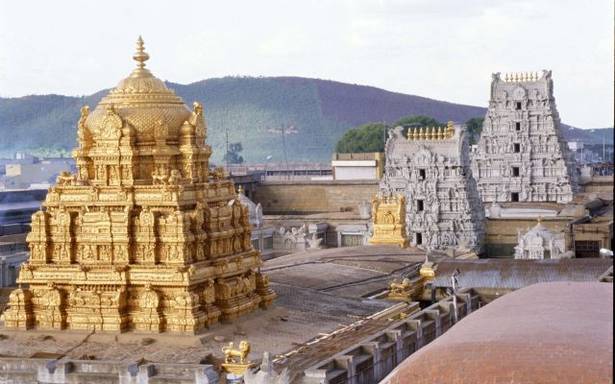
Tirupathy and Srirangam Gopuram Gold Layer by Shivappa Nayaka
Tirupathy and Srirangam Gopuram Gold Layer by Shivappa Nayaka ÜsÁT|ŸÜ`lsÁ+>·+ýË“ $eÖq >Ã|ŸÚs\Å£” ‹+>±sÁT |ŸPÔá |ŸPsTT+ºq ¥e|ŸÎ H...
-
 GARUDA MANTRA' ONLY CAN EXTRICATE THE 'NAGA BANDHAM' OF SECRET CHAMBER --B. Now the time has come to unveil the highly mysteriou...
-
 Puduru Chadalavada Seetarama Sastry 1832 was entrusted by his British friend, Mestarkululo, to write an educational book for British childre...